
"Arabic coffee culture"
200 article(s) found

Coffee Chronicle the Historical Development of Coffee Culture
In the 6th century, on the plateau of Abyssinia, a shepherd named Caldai drove goats to the new prairie for grazing, and accidentally found coffee fruit due to the accidental feeding of goats. In the early 10th century, Dr. Daggers, a famous doctor in Iraq, admitted and documented the pharmacological effects of coffee. This is one of the earliest valuable medical records of coffee. The Arabs invented the whole coffee in the 11th century.

How did coffee enter the Chinese market?
Coffee is said to have begun in the early 11 th century and can be found in ancient Arabic documents. Before that, coffee beans in the Arab region were dried and boiled as stomach medicine, and later learned that coffee also had a refreshing effect, coupled with the strict prohibition of alcohol by Muslim precepts. Muslims use roasted juice instead of alcohol as an exciting drink. It is said that the local people know how to use

Boutique coffee learn from Ethiopian Harald Coffee
Ethiopia Harald Coffee Essex is the first country in the world to grow coffee and maintain the oldest coffee culture. It still maintains a very traditional and ancient coffee growing process. Ethiopia latitudes 6 to 9 degrees north. Tropical forests 34 to 40 degrees east longitude and 1600 to 1800 m above sea level. Harald is not only the most expensive coffee in the world, but also a beautiful legend.

Lake Titicaca in Bolivia: water washing, iron washing, Pica boutique coffee beans, origin, development, history and culture
The advantage of Bolivian coffee lies in its high altitude and excellent varieties of coffee, where the traditional Tibica and a small amount of Kaddura are highly valued in the world market. In the past, coffee trees in Bolivia used to act as hedges and ornaments around the garden. Real commercial production began in the early 1950s. The great frost in 1957 seriously damaged Pakistan.

Yejia Xuefei can be divided into two categories according to the different ways of handling raw coffee beans.
Category An is the washing method, and the grade standard is set by the American Fine Coffee Association SCAA, which is divided into Gr-1;Gr-2, the smaller the Arabic numeral is, the higher the grade is, the style of G1 Yega Chuefei is distinct, and the flavor of citrus flavor and floral flavor in the coffee liquid is a delicious taste that everyone can't resist; category B is the raw coffee bean processed by the sun, and the grade is Gr-1;Gr-3;Gr-4;Gr-5, which is also the highest.

The practice of Brazilian coffee with mellow taste an introduction to the origin and flavor culture of Brazilian coffee
Brazilian coffee is baked individually: more and more people are fond of roasting their own coffee beans, because usually after roasting, they can only keep their freshness for 1-7 days, and then they begin to stale, leaving only bitterness and no mellow taste. Therefore, self-baking can ensure the freshness of coffee beans. The traditional roaster is drum type, this kind of roaster

Write the basics of coffee culture in a cafe
This is an era in which the use of wifi (wireless network communication) has become a general trend, but the Beijing municipal government requires public places such as cafes, hotels and bookstores to be monitored by unexplained and ridiculously expensive security software, forcing coffee shop owners to cancel wifi services, and customers have expressed loss of confidence in the future of life in cafes. I decided to be optimistic and think about it.

The Story of the basic knowledge of Fine Coffee Culture and Coffee name
In a consumer society, the so-called necessities are no longer just to meet basic needs. Like coffee, if you don't drink it, you won't die, but if you don't drink it, you won't be able to turn on electricity for a day. Unwittingly become an addiction everyone has a little addiction, not coffee, but also other. In Hong Kong, not many people can speak French Caf au lait. People are more familiar with foaming latte. Fortunately, it has not been completely localized yet. Here.
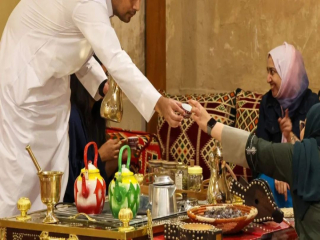
The Origin of Coffee in Arabian Peninsula Qatari traditional Coffee Flavor characteristics production method Taste method
Professional coffee knowledge exchange more coffee bean information please follow the coffee workshop (Wechat official account cafe_style) more boutique coffee beans please add private Wechat Qianjie coffee, WeChat: qjcoffeex in Qatar to watch the World Cup although can not drink, but after every game, fans can

What is Blue Bottle Coffee?
Professional coffee knowledge exchange More coffee bean information Please pay attention to coffee workshop (Weixin Official Accounts cafe_style) Legend has it that at the end of the 17th century, Turkish troops swept through most of Eastern and Central Europe and arrived in Vienna in 1683. The Viennese, desperate for an apostle, crossed the Turkish line to the Polish army nearby and spoke Turkish and Arabic.

The story of the basic knowledge of coffee culture and the name of coffee.
In a consumer society, the so-called necessities are no longer just to meet basic needs. Like coffee, if you don't drink it, you won't die, but if you don't drink it, you won't be able to turn on electricity for a day. Unwittingly become an addiction everyone has a little addiction, not coffee, but also other. In Hong Kong, not many people can speak French Caf au lait. People are more familiar with foaming latte. Fortunately, it has not been completely localized yet. Here.

Yemeni coffee culture introduces the unique flavor of mocha, the taste of mocha, the species of mocha.
Yemeni mocha is one of the oldest coffee in the world, but until recently, Yemeni mocha has come to be regarded as one of the best and most delicious coffee in the world. Mocha coffee, which has a long history, is synonymous with coffee. Its unique aroma and sour taste have deeply attracted many coffee lovers. The name mocha coffee comes from Mocha in Yemen, which can no longer be used in this port.

An introduction to the historical and cultural development of coffee in China
There is no way to examine the source of coffee. One of the many legends refers to the highlands of Cafa province in southwestern Ethiopia. It is said that a shepherd became very excited and lively when he discovered that the sheep had eaten a plant more than a thousand years ago, so he discovered coffee. It is also said that a coffee forest was destroyed by a wildfire, and the smell of barbecue coffee attracted the attention of the surrounding residents.

Arabs pay attention to all kinds of coffee.
Arabs like to drink coffee, this kind of coffee is called Turkish coffee or Arabica coffee, the cup is small, strong, the color is close to black.

Coffee Culture and the Development of Coffee in the Historical World
Europeans first came into contact with coffee around 1515-1519, but were not interested in it for a long time. In 1585, 30 years after the emergence of cafes in Istanbul, the Vatican envoy Morosini reported that these people were all humble, tacky and unenterprising, just wasting their time all day. So, they just sit around all the time

A brief introduction to the Culture and Flavor of Coffee in Ethiopia, a coffee-rich country in Africa
Professional coffee knowledge exchange more coffee bean information please follow the coffee workshop (Wechat official account cafe_style) front street-African coffee producing area Kenya coffee grade profile there are different opinions about the origin of coffee, when it comes to coffee, you have to think of Africa. It is said that the birthplace of coffee is the province of KAFFA in Ethiopia. It is said that Kaldai, the shepherd of Kafa, is in Ethiopia.

Understand Arabica Coffee how to make Arabica Coffee Culture
Professional coffee knowledge exchange more coffee bean information please follow the coffee workshop (Wechat official account cafe_style) Arabian coffee history: the origin of coffee legend came from the shepherds of Ethiopia, and then spread to the Arab countries, but according to historical data about the eighth century AD the leaves of the Arabian Peninsula and Ethiopia across the Red Sea have a record of trade, and at this time there are also records of trade in Yemen.

What is Blue Bottle Coffee? A Blue Bottle Coffee Start-up Story from a Cart
Professional coffee knowledge exchange More coffee bean information Please pay attention to coffee workshop (Weixin Official Accounts cafe_style) Legend has it that at the end of the 17th century, Turkish troops swept through most of Eastern and Central Europe and arrived in Vienna in 1683. The Viennese, desperate for an apostle, crossed the Turkish line to the Polish army nearby and spoke Turkish and Arabic.
Arabs are very particular about the etiquette and procedure of drinking coffee.
When Europeans first came into contact with coffee, they called the seductive drink "Arabian wine", and when conservative Catholics cursed coffee as "the drink of the devil Satan", they would never think of what a precious thing they inherited from the infidel. As the first region in the world to drink and produce coffee, Arab countries